|
|
|
Maude's Lampshade Crafter's Handbook
|
Excerpts from Introduction . . .
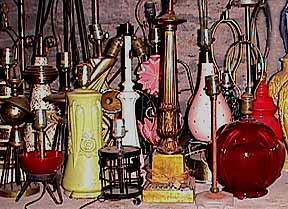
"I love lamps. I have several in every room of my house and another fifty or sixty stashed away in the basement (a little savings account). I'm strictly into vintage lamps, which are wonderful, yet functional, collectibles that are usually quite affordable, especially when their shades are missing or damaged (almost always the case)."
|
|
|
"The trouble is, it can be difficult (if not impossible) to find new shades that have the right look for vintage or antique lamps. And a halfway-decent shade for any kind of lamp can be pricey. While I've always had great luck finding used and vintage lampshades, usually costing little to nothing, they almost always have something wrong with their covers.
"Which leads me to another common dilemma. What do you do with a lampshade that's bedraggled beyond usefulness? You hate to throw it away, especially when it's a good one. Instead, more often than not, it gets stashed in the attic or left to rust in the garage or basement (as if the lampshade fairies might creep in one night and restore it to its former glory), only to wind up, years later (usually with regret), given away to charity, sold at a garage sale, or tossed in the trash after all, a particular shame when it's a vintage shade, one you paid a lot for, or one that goes perfectly with a lamp you still own (or all of the above). Just about every woman (and several men) that I've mentioned my interest in this topic to has admitted to just such a cache of spoiled shades (or at least one).
My goal is to provide you with everything you need to know to be able to make the most common styles of lampshades: soft, fabric-covered shades (traditional, lined, stretch shades and Victorian-style shades, although this technique can be used to cover other, less-fancy frames), as well as hardback shades (when that chapter becomes available). While I do include plenty of information on how to decorate shades, the focus of this book is on basic technique, rather than lots of specific shade projects for you to copy. Once you understand how they're constructed, you'll be able to look at a shades and know how it was made. You can then come up with wonderful ideas of your own or, if your creative juices need a little stimulation to get them flowing, you'll quickly discover that there are plenty of ideas available all around you."
|
|
|